A city organized by skill
Today, ‘36 Streets’ is the customary name for Hanoi's Old Quarter, not a checklist of exactly 36 streets that still practise their namesake trades. The National Museum of History associates the phrase with the historic commercial quarter, largely within the former Hoàn Kiếm District, while Vietnam's official tourism site uses it as the familiar name for the Old Quarter.
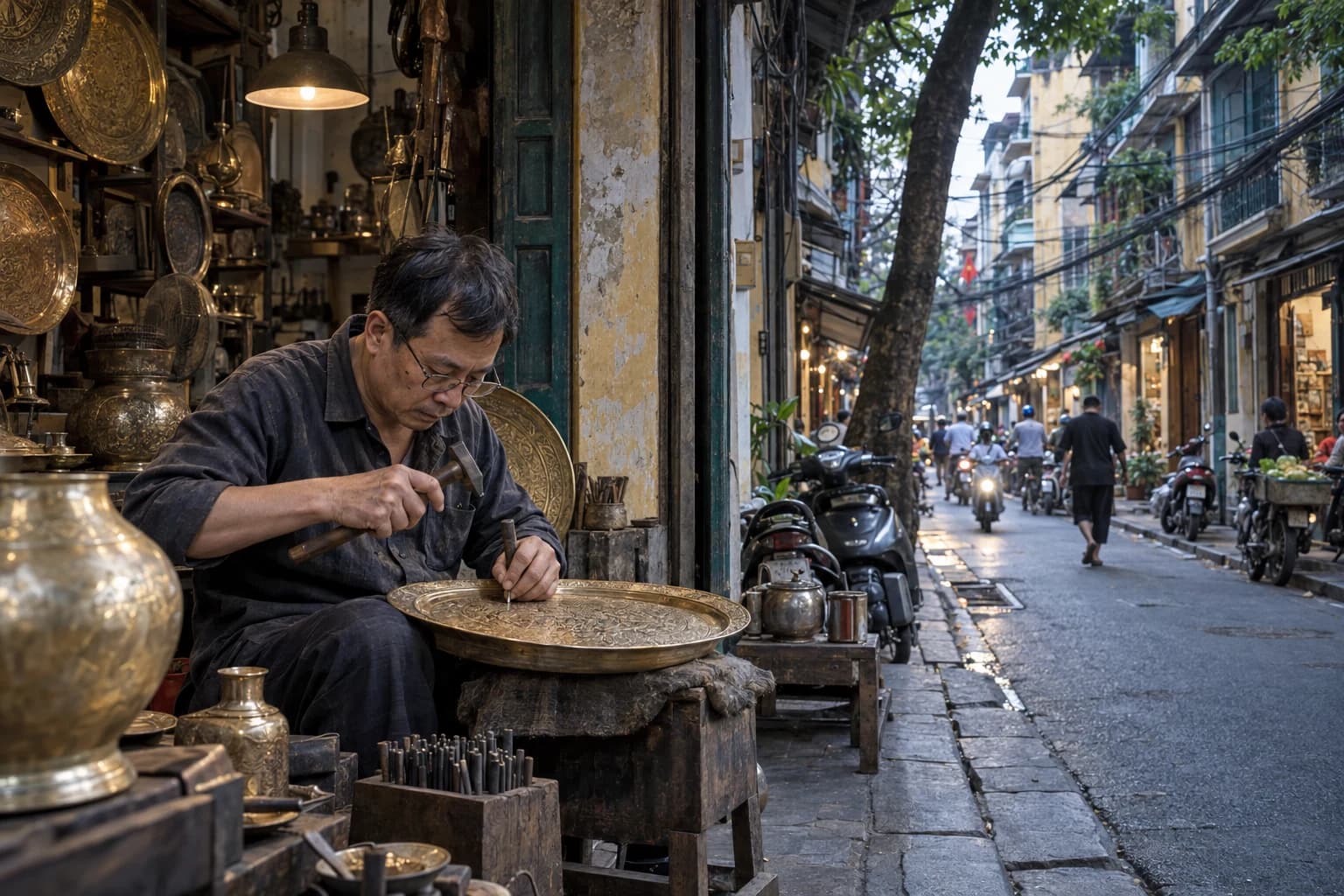
The names are still useful because they record how urban work was organized. Artisans and traders gathered around particular skills or goods, and many streets became known for what people made, brought in, or sold there. A craft street could therefore contain workshops, specialist shops, or a combination of production and trade rather than one identical activity behind every doorway.
The map was never frozen. Demand changed, trades moved, and some streets became known for completely different merchandise while their older names remained. Hàng Đào, for example, shifted from dyeing and textile associations toward other forms of trade. Read a street name as historical evidence, not as a promise about every present-day shop.
A craft street is not the same as a craft village
The historical craft streets discussed here belonged to the urban trading fabric of the Old Quarter. A craft village is a community associated with making a particular group of goods. In the examples discussed here, the production communities are outside the Old Quarter: Hanoi's official portal describes Bát Tràng pottery and Vạn Phúc silk weaving as craft villages. They are a different kind of place, not two more streets inside the ‘36 Streets’.
The two systems were connected by people and goods. The National Archives Center I describes skilled workers arriving from craft villages and helping form occupational wards and streets in the capital. The National Museum of History also records artisans settling in the city and goods reaching one street from several places. It is more accurate to picture a network than a one-street-to-one-village family tree.
Hàng Đồng makes the distinction concrete. Hanoi's official portal explains that shops on the street displayed, sold, and collected copper objects, while production took place at furnaces in several craft villages. The street was an urban point of exchange; the making did not all happen behind its shopfronts.
For a visitor, the practical lesson is simple: a historical street name is not a provenance label. If origin matters to you, ask where the item was made, who made it, which steps were completed by hand, and what the seller can actually verify. A specific answer is more useful than a broad claim such as ‘local’ or ‘traditional’.
Read the street as an urban archive
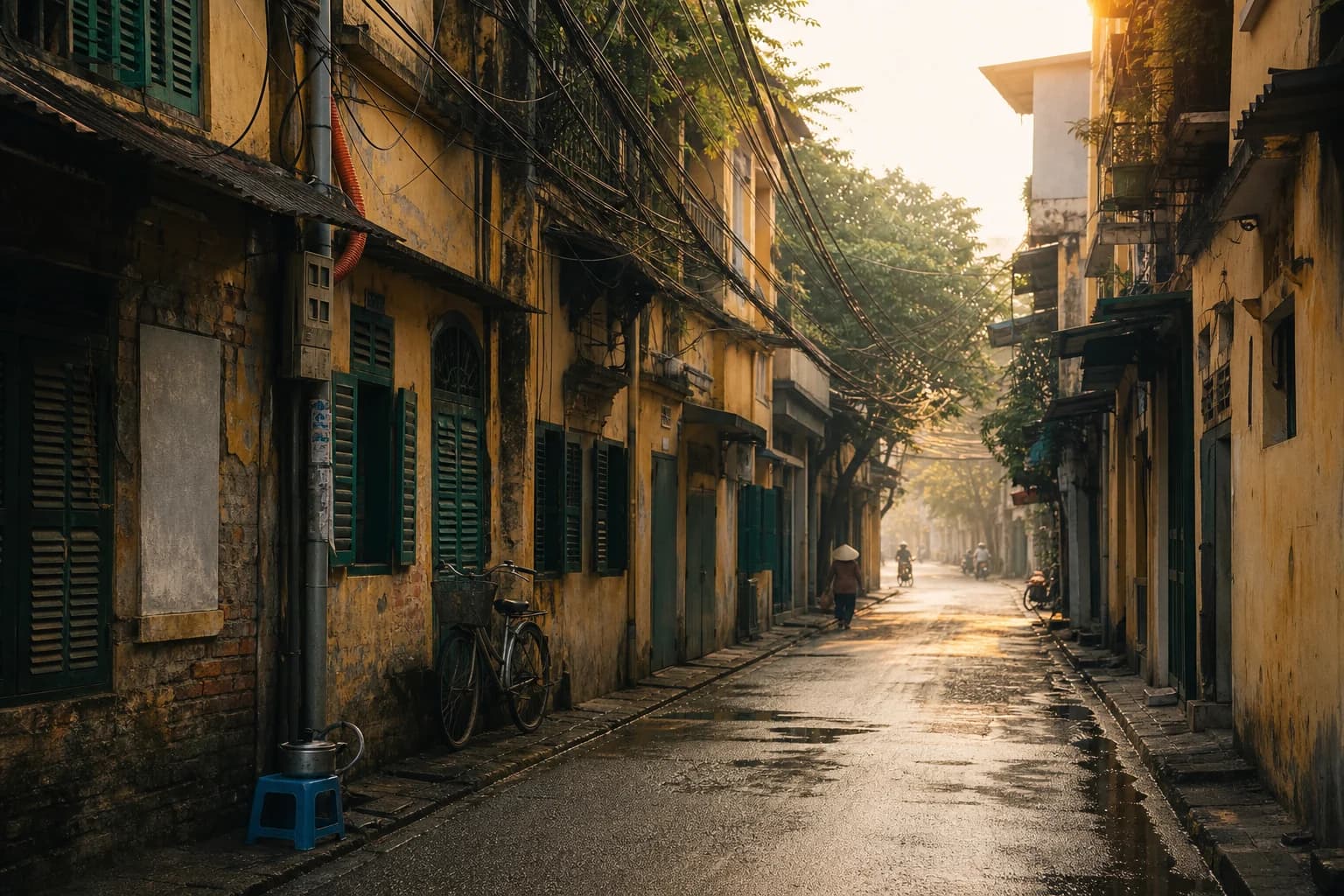
The most revealing evidence is not always a product display. The National Museum of History points to the Old Quarter's narrow, deep shop-houses, internal courtyards, communal houses, temples, and shrines connected with occupational groups. Together with street names, these features show how commerce, home life, worship, and craft once occupied the same compact urban fabric.
Look slowly and separate what you can observe from what you are inferring. A carved sign or communal house may preserve a trade memory even when nearby shelves hold modern goods. A working tool can show that a process remains visible, but it does not by itself prove where every finished item came from. Buildings have also been repaired and adapted across many periods, so one façade cannot explain the whole history of a street.
Use four questions as you walk: What did the street name historically refer to? Was the place associated with making, selling, or both? Are there communal or religious buildings linked to the occupational group? What has clearly changed in the present-day trade? These questions turn a shopping street into a readable urban record without treating it as an open-air museum.
People at work are not exhibits. Ask before taking a close photograph, keep doorways and pavements clear, and avoid interrupting a task for a staged image. If you want a route through the quarter, use the Old Quarter walking guide; if you want to compare souvenirs, use the separate shopping guide.
- Street name: a clue to historic specialization, not a present-day guarantee
- Shop-house: evidence that work, trade, and home life shared limited space
- Communal house or shrine: a possible link to an occupational community
- Current merchandise: a record of change as well as continuity
A living story, with clear boundaries
Hanoi's craft history is not confined to the Old Quarter. The city's cultural-industries strategy includes handicrafts and design, while official Hanoi sources continue to describe craft-village communities such as Bát Tràng and Vạn Phúc. Those places deserve their own visitor checks for access, workshops, buying, and transport; this article keeps its focus on what the historic streets reveal about urban organization.
That boundary also matters when buying. A street can preserve a genuine history without guaranteeing that every object sold there was made locally, made by hand, or produced in a named village. Compare construction, ask precise questions, and accept uncertainty when a seller cannot document a claim. Respectful evaluation protects both the visitor and the meaning of the history being used to market an item.
Hanoi Heritage Bags draws editorial inspiration from the Old Quarter's colors, textures, and craft memory. That connection is a design story, not evidence that a bag was made on a particular historic street or in a particular craft village. The product links on this page come from the active collection so you can compare current pieces without turning cultural history into an unsupported origin claim.
Sources for this update were checked on 7 August 2026. Historical interpretation is relatively stable, but present-day shops, merchandise, and access can change; verify practical details directly before making a special trip.
Sources & updates
Practical details may change. Check these official sources before planning your visit.
Vietnam Tourism: Shopping in Hanoi — the Old Quarter and ‘36 Streets’ ↗National Archives Center I: Craft villages and craft streets of Thăng Long–Hanoi ↗Vietnam National Museum of History: An overview of Thăng Long–Hanoi craft streets ↗Hanoi People's Committee: A historical view of the 36 Streets ↗Hanoi People's Committee: Bát Tràng pottery and Vạn Phúc silk craft villages ↗UNESCO: Hanoi cultural-industries strategy ↗